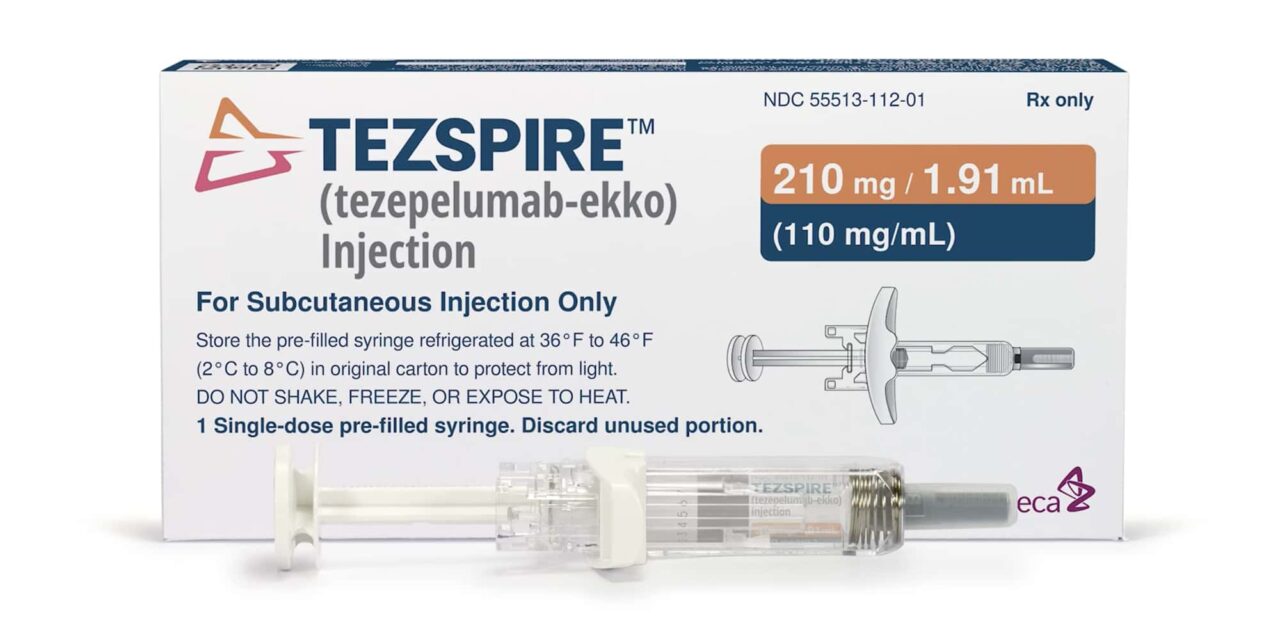
Originally approved for adult and pediatric severe asthma, Tezspire (tezepelumab-ekko) is now FDA-approved for chronic rhinosinusitis with nasal polyps (CRSwNP) in patients aged 12 and older.
RT’s Three Key Takeaways:
- FDA Approval Expansion – The US FDA has approved Tezspire (tezepelumab-ekko) as the first and only biologic targeting TSLP for chronic rhinosinusitis with nasal polyps (CRSwNP) in patients aged 12 and older, expanding its prior indication for severe asthma.
- Clinical Impact – In the Phase III WAYPOINT trial, Tezspire significantly reduced nasal polyp severity, nearly eliminated the need for surgery, and cut systemic corticosteroid use compared with placebo.
- Global Significance – CRSwNP affects about 320 million people worldwide, and experts say Tezspire’s approval marks a major advance in treating this persistent inflammatory disease by addressing its root epithelial-driven mechanisms.
The US FDA approved Tezspire (tezepelumab-ekko) for the add-on maintenance treatment of inadequately controlled chronic rhinosinusitis with nasal polyps (CRSwNP) in adult and pediatric patients aged 12 years and older. Tezspire is the first and only biologic approved for CRSwNP that targets thymic stromal lymphopoietin (TSLP).
Tezspire was originally approved in 2021 as an add-on maintenance treatment of adult and pediatric patients aged 12 years and older with severe asthma.
CRSwNP affects up to approximately 320 million people worldwide and is a complex epithelial-driven inflammatory condition characterized by persistent inflammation and benign polyp growths within the nasal cavity.1-5 People living with CRSwNP commonly experience airflow obstruction and symptoms including congestion and an impaired sense of smell.1-5 For many patients, current therapies such as systemic and intranasal corticosteroids and repeated sinus surgeries do not offer lasting relief.3
“For people living with CRSwNP, every breath can feel like a struggle, and many endure years of recurring symptoms and surgeries without significant relief. The approval of Tezspire represents a meaningful advance, derived from our longstanding focus on complex inflammatory diseases rooted in epithelial biology,” said Jay Bradner, MD, executive vice president of Research and Development at Amgen. “This approval is an important step forward for patients who have long needed more durable options that address the root causes of this disease, while establishing the impact of TSLP inhibition beyond asthma.”
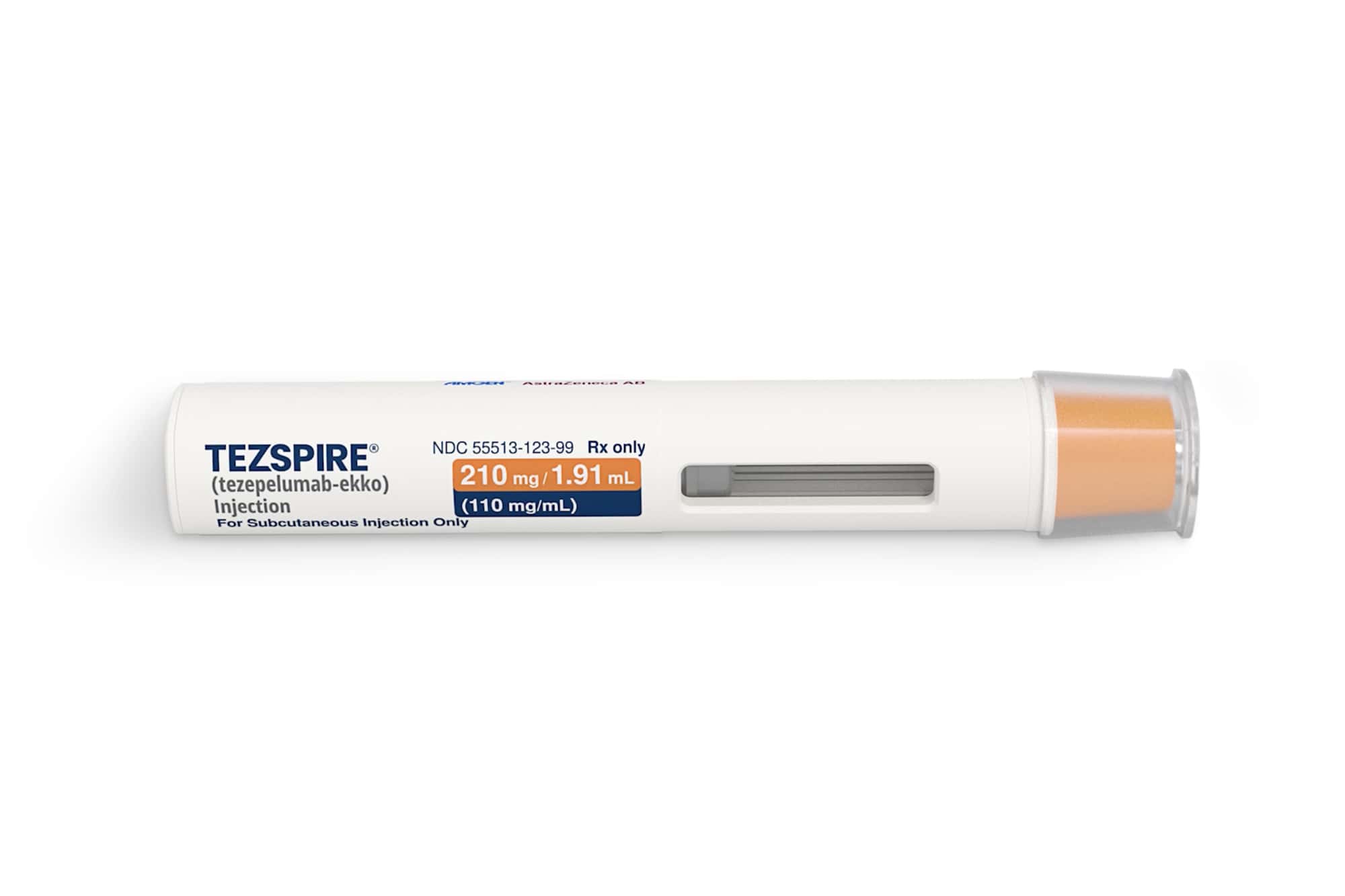
Tezspire is indicated for:
- the add-on maintenance treatment of adult and pediatric patients aged 12 years and older with severe asthma. TEZSPIRE is not indicated for the relief of acute bronchospasm or status asthmaticus.
- the add-on maintenance treatment of adult and pediatric patients aged 12 years and older with inadequately controlled chronic rhinosinusitis with nasal polyps (CRSwNP).
The FDA approval was based on efficacy and safety data from the WAYPOINT Phase III trial, which were presented at the 2025 American Academy of Allergy Asthma & Immunology (AAAAI)/World Allergy Organization (WAO) Joint Congress and simultaneously published in The New England Journal of Medicine.6,7 In the trial, Tezspire demonstrated a statistically significant and clinically meaningful reduction in nasal polyp severity and showed near-elimination of the need for surgery and significant reduction in systemic corticosteroid use vs. placebo.
“Over 320 million lives globally are disrupted by chronic rhinosinusitis with nasal polyps. The FDA approval of Tezspire brings forward a new treatment option that has demonstrated rapid and sustained symptom improvement, nearly eliminating the need for future surgeries and significantly reducing systemic steroid use,” said Dr. Joseph Han, Vice Chair of Department of Otolaryngology – Head and Neck Surgery, Old Dominion University, and co-primary investigator of the WAYPOINT trial. “By targeting thymic stromal lymphopoietin (TSLP) at the top of the inflammatory cascade, Tezspire offers a novel option for patients who continue to endure the disruption of this disease despite available treatments.”
“Chronic rhinosinusitis with nasal polyps is a persistent and often-overlooked disease that can significantly impact daily life, robbing patients of their ability to breathe without congestion and full sense of smell,” said Kenneth Mendez, President and CEO of the Asthma and Allergy Foundation of America (AAFA). “This approval introduces an innovative treatment option for patients with the potential to help address the ongoing cycle of debilitating symptoms, surgeries and systemic steroid use.”
The safety and tolerability profile of Tezspire in the WAYPOINT trial was generally consistent with its established profile in severe asthma.6 The most frequently reported adverse events in the trial were COVID-19, nasopharyngitis and upper respiratory tract infection.6
Regulatory applications are currently under review in Europe, China, Japan and several other countries based on the WAYPOINT trial.