The FDA accepted Insmed’s supplemental new drug application with Priority Review for Arikayce to treat Mycobacterium avium complex (MAC) lung disease.
RT’s Three Key Takeaways:
- Priority Review Granted: The FDA accepted a Supplemental New Drug Application (sNDA) with Priority Review for Arikayce to treat Mycobacterium avium complex (MAC) lung disease, setting a target action date of January 28, 2027.
- Earlier Patient Access: If approved, the therapy could expand beyond refractory cases to reach patients earlier in their disease course, including those newly diagnosed or experiencing recurrent infections, according to the company.
- Phase 3b Trial Verification: The regulatory submission is supported by the Phase 3b ENCORE study, which met its primary endpoint for respiratory symptom improvements and secondary culture conversion endpoints, according to trial findings.
The USFDA has accepted a Supplemental New Drug Application (sNDA) for review of Arikayce (amikacin liposome inhalation suspension) for the treatment of Mycobacterium avium complex (MAC) lung disease as part of a combination antibacterial regimen, according to Insmed Inc.
The FDA granted Priority Review to the application and designated a target action date of January 28, 2027, under the Prescription Drug User Fee Act (PDUFA), according to the company.
“The FDA’s acceptance of this application marks a pivotal moment in our ambition to change the treatment paradigm for MAC lung disease,” said Martina Flammer, MD, MBA, chief medical officer of Insmed. “MAC lung disease is progressive — the longer the infection persists, the greater the damage to lung tissue and the harder it becomes to treat. If full approval is granted, ARIKAYCE could reach patients earlier in their disease course, including those newly diagnosed or facing recurrent infections. We look forward to engaging with the FDA throughout the review process.”
Regulatory History and Study Evidence
Arikayce originally received FDA accelerated approval in 2018 for refractory MAC lung disease in adult patients who had limited or no alternative treatment options, according to the company. It was the first medicine approved under the Limited Population Pathway for Antibacterial and Antifungal Drugs (LPAD), enacted under the 21st Century Cures Act.
The submission for full approval is supported by data from the randomized, double-blind, placebo-controlled Phase 3b ENCORE study, which served as the confirmatory post-marketing requirement, according to the news release. The trial evaluated the safety and efficacy of once-daily Arikayce plus multidrug therapy in 425 patients across 177 sites globally. The enrolled population had new MAC lung infections and had not received antibiotics, with 82.4% experiencing their first infection and 17.6% presenting with a second or third infection.
Participants received either Arikayce plus multidrug therapy (azithromycin 250 mg and ethambutol 15 mg/kg) or placebo plus multidrug therapy for 12 months, followed by 3 months off treatment, according to the company. The study met its primary endpoint, showing statistically significant improvements in Respiratory Symptom Score at month 13, and met secondary culture conversion endpoints, demonstrating earlier, greater, and more durable conversion compared to comparator therapy.
Delivery and Safety Considerations
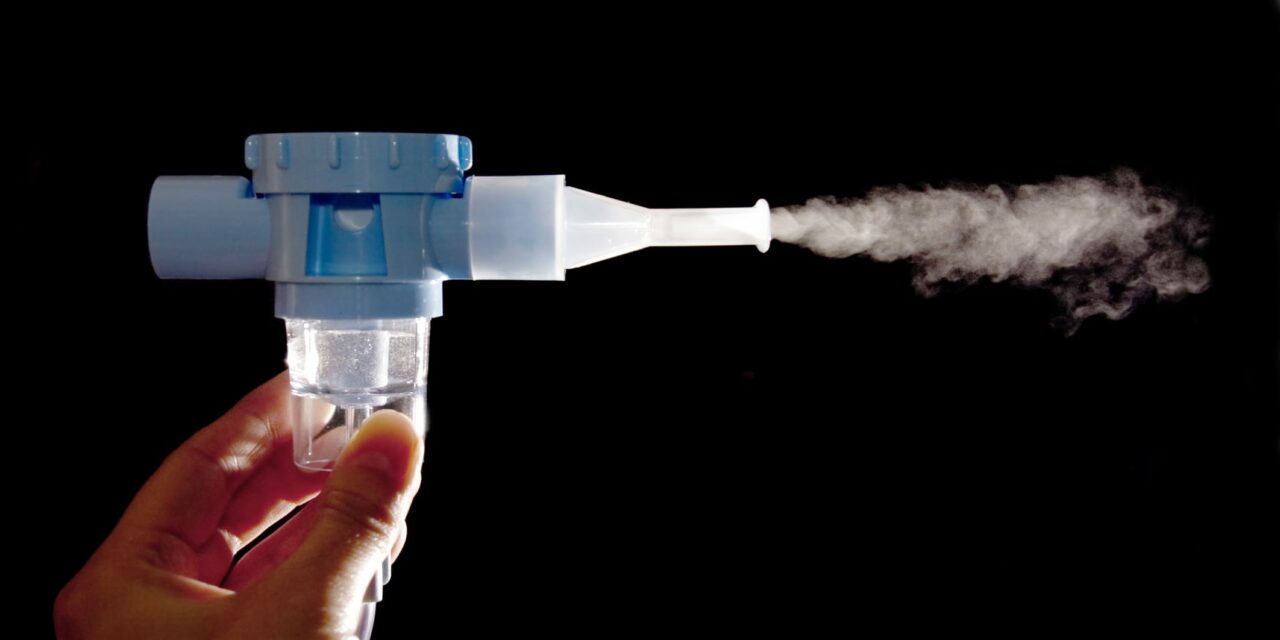
Arikayce is delivered directly to the lungs once daily using the Lamira Nebulizer System, manufactured by PARI Pharma GmbH, according to the release. The vibrating, perforated membrane nebulizer is designed to enable targeted uptake by lung macrophages while limiting systemic antibiotic exposure and associated toxicity risks.
According to the prescribing information, Arikayce carries a boxed warning for an increased risk of respiratory adverse reactions, including hypersensitivity pneumonitis, hemoptysis, bronchospasm, and exacerbation of underlying pulmonary disease, which have required hospitalization in some cases. The most common adverse reactions reported in clinical trials include dysphonia, cough, bronchospasm, hemoptysis, ototoxicity, upper airway irritation, and musculoskeletal pain.
Insmed also stated that it plans to review the ENCORE study data with regulatory authorities in Japan during the fourth quarter of 2026 to support potential label expansion.